Campany overview
A moisture meter company manufactures, designs, and distributes specialized electronic instrumentation used to measure the percentage of water contained within various substances. These tools are critical for quality control, safety compliance, and damage prevention across multiple global sectors.
Primary Target Industries
Construction & Building Inspection
Woodworking & Forestry
Manufacturing & Packaging
Mission and Vission
The mission and vision of moisture meters center on safeguarding quality, preventing costly structural damage, and ensuring material integrity. The core purpose is to provide quick, accurate, and non-destructive analysis of water content in materials like wood, concrete, and agricultural produce.
The Core Mission
To empower industries and professionals to eliminate moisture-related defects, such as mold, rot, and structural warping, by delivering highly accurate moisture measurement tools and reliable data.
The Core Vision
A world where material waste and project failures due to uncontrolled moisture are completely eliminated, fostering absolute consistency, efficiency, and sustainability across manufacturing, agriculture, and construction industries.
Our Expertise
Moisture meters are specialized diagnostic tools used to accurately measure water content in materials like wood, building supplies, grains, and soil. They are essential for preventing mold, structural degradation, and spoilage across the construction, agricultural, and manufacturing industries.
Pin-Type Meters: These meters use metal probes to test electrical resistance, giving you precise point measurements of your materials.
Pinless (Induction) Meters: Non-destructive tools that scan surfaces to detect moisture without leaving pinholes.
Grain & Agricultural Meters: Ideal for monitoring the water content of wheat, rice, corn, and seeds to ensure safe, long-term storage and prevent decay.
Industrial Analyzers: Laboratory-grade, thermogravimetric testing systems used for pharmaceuticals, food, and chemicals.
Team Information
A moisture meter is a crucial diagnostic instrument used across construction, agriculture, and manufacturing to quantify the percentage of water in a given substance. These indirect sensing devices measure moisture content indirectly using either electrical resistance (pin-type) or electromagnetic capacitance (pinless).
FAQs
A moisture meter is a tool used to measure the water content in various materials like wood, drywall, or soil. They help prevent warping, mold, and structural damage by allowing you to quickly check if an area or material is damp.
Pin Type vs. Pinless Meters
Pin Meters: Use sharp metal pins that are pressed into the material. They measure the electrical resistance between the two pins; the more moisture present, the less resistance there is.
Pinless Meters: Use a non-destructive sensor pad on the back of the device to detect moisture up to a specific depth without damaging the surface.
Material-Specific Readings
Wood: Meters are typically calibrated for wood and measure the actual percentage of moisture content (%MC).
Drywall and Concrete: When measuring non-wood materials, the meter measures a Wood Moisture Equivalent (WME) value, which indicates how wet the material is relative to equilibrium.
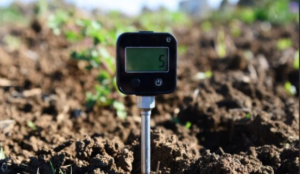
Soil: Plant meters often use a 1–10 scale where 1 is completely dry and 10 is very wet.
Accuracy and Troubleshooting
Nearby metal: Metal pipes, nails, or screws near the meter can heavily interfere with your readings.
Surface treatments: Fresh paint, finishes, or heavy condensation can cause false-high readings. Always ensure the surface is clean and dry before testing.
Calibration: Meters can lose accuracy depending on the wood species (e.g., Pine vs. Oak). It is important to adjust the meter’s settings to the specific material or use a manufacturer-provided correction table.